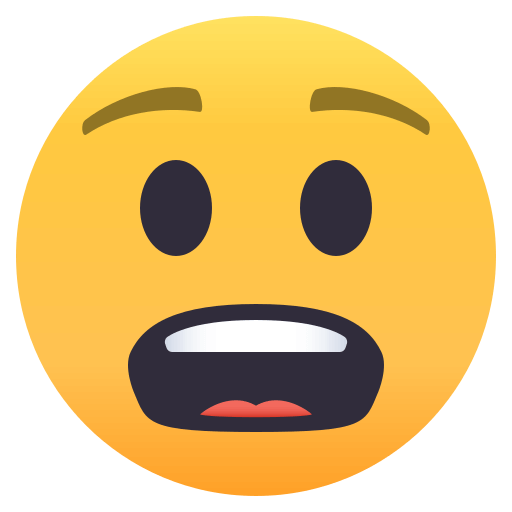
😧 An anguished face expresses distress, shock, or worried disbelief. It suits upsetting news, overwhelming situations, and moments when you do not know how to respond.
Compare platform designs and explore its recorded visual history.
63 recorded appearances across 17 platform families
Platform comparison
Compare the Anguished Face emoji across platforms
10 platform designs
Compare 😧 in Apple, Google, Samsung and other styles. Download each available version as a transparent PNG directly from its card, or choose SVG where available. Copying the character uses the style of the receiving device.
Enhanced PNGs are reconstructed from smaller vendor artwork; the exact originals are shown above for comparison. Artwork credits & usage terms
The visual archive
Anguished Face emoji design history
63 recorded appearances across 17 platform families
Follow this emoji’s recorded designs, from the earliest artwork on the left to the latest documented version on the right. Download a particular original to keep its platform design.
Original dimensions and animation are preserved. Dates labelled “Date unverified” have not been independently verified; limited-precision records show only the known month or year. Date checks identify the named release, not the first appearance of every drawing. Releases that reuse a drawing are not necessarily separate design milestones. Unavailable originals are marked on their records. How this archive is documented →
The meaning
What does the 😧 Anguished Face emoji mean?
The Anguished Face features small, open eyes, slightly raised eyebrows, and a wide, frowning mouth. It conveys a profound sense of shock, concern, or sorrowful disbelief. Unlike the Fearful Face, it lacks the blue forehead tint, focusing instead on a grounded state of emotional distress or being overwhelmed by negative news.
Common uses
Expressing genuine shock or disbelief in response to tragic news or unexpected negative events.
Conveying a sense of being overwhelmed or deeply worried in professional or academic settings.
Reacting to cringe-inducing social situations or embarrassing public moments.
Emphasizing physical pain or intense discomfort when describing an injury or illness.
Background
This emoji was introduced as part of Unicode 6.1 in 2012.
Copy 😧 to use the Unicode character; the receiving device chooses its appearance. Download an available PNG or SVG to keep a particular drawing. Historical originals retain their native bytes and dimensions. Enhanced PNGs are separately labeled generated derivatives.