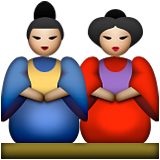
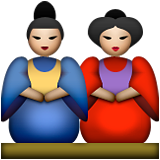
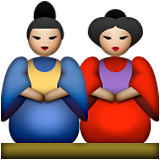
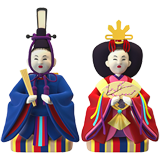
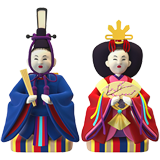
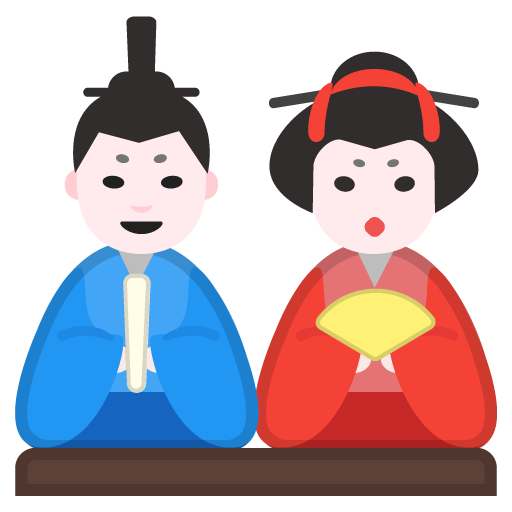
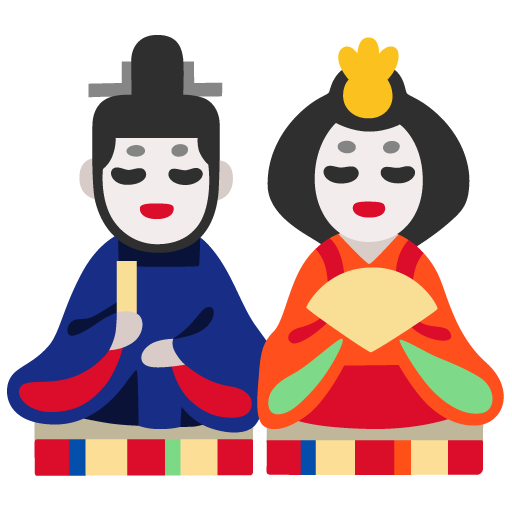
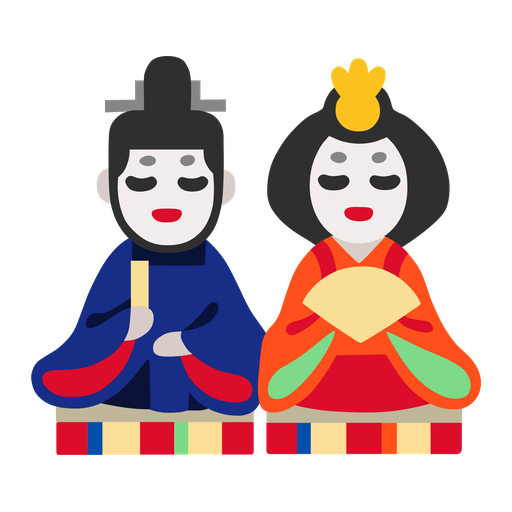
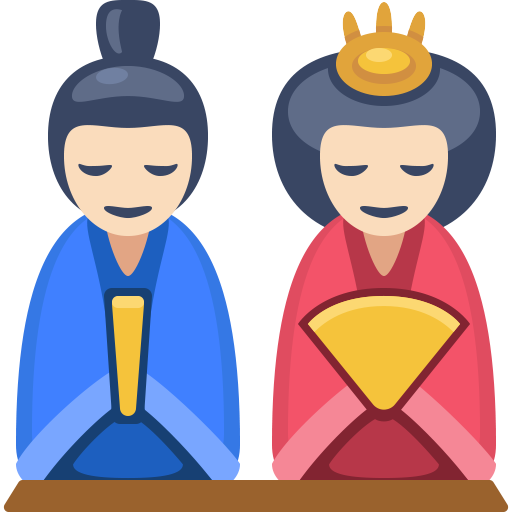
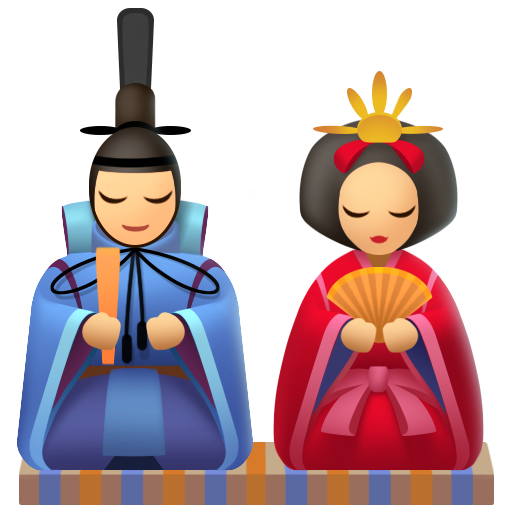
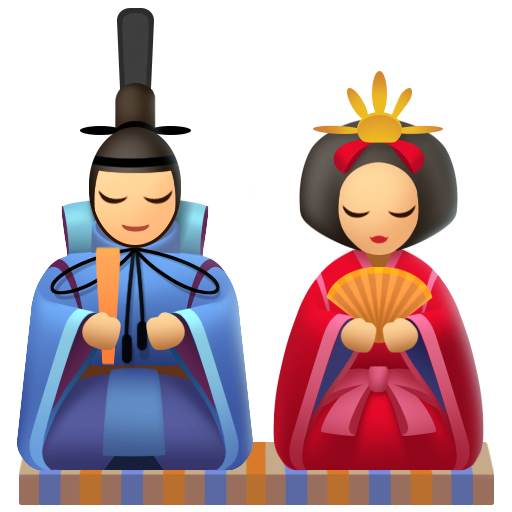
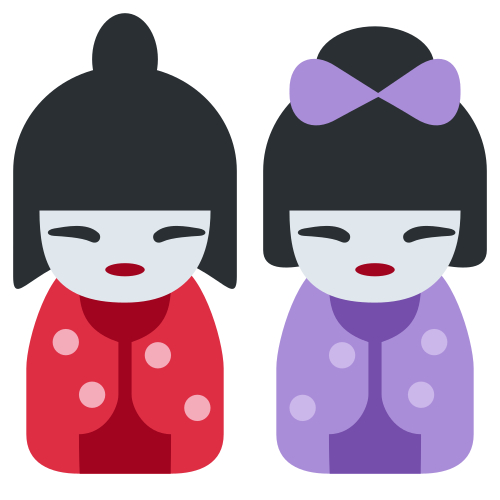
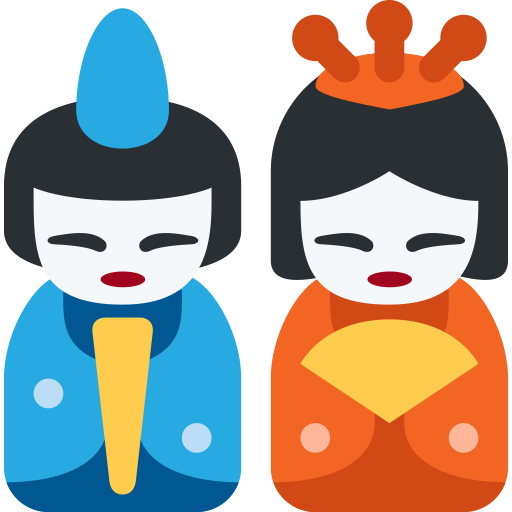
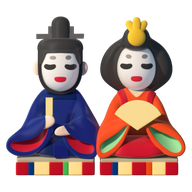
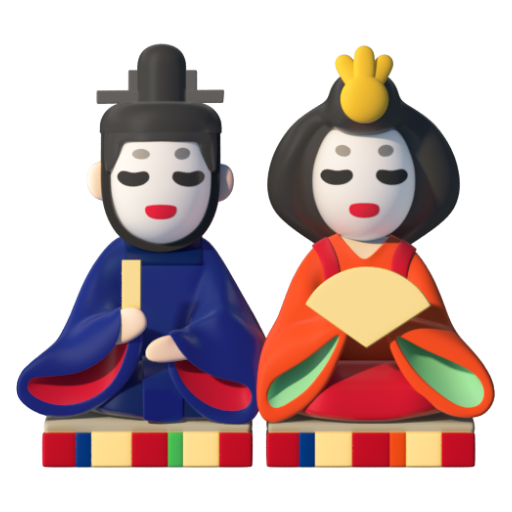
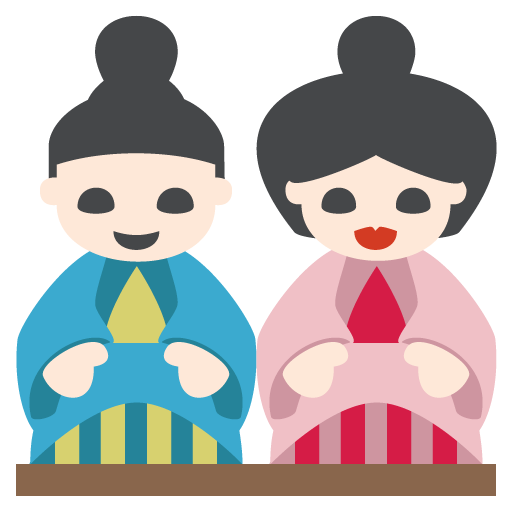
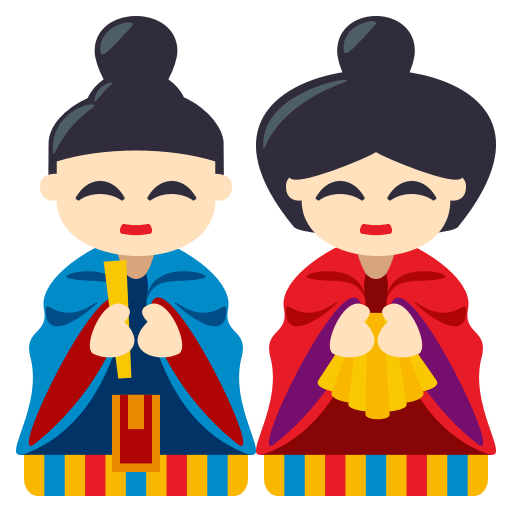
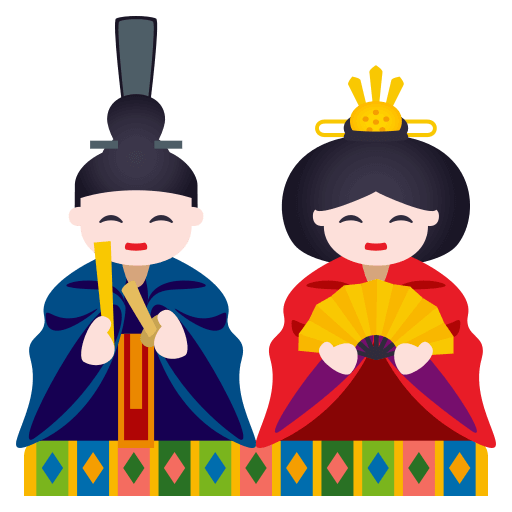
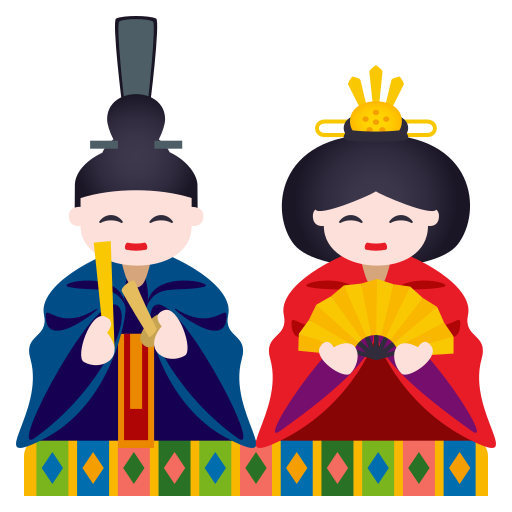
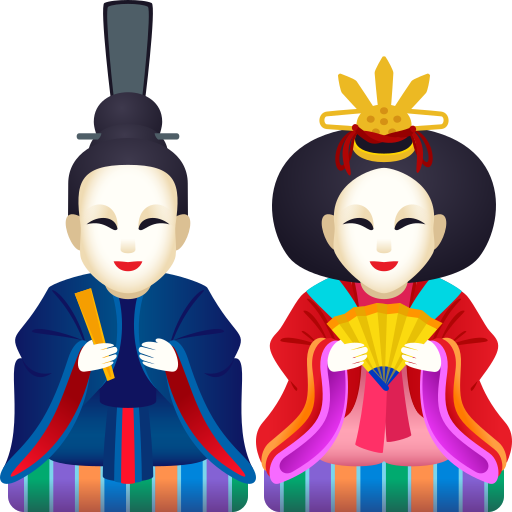
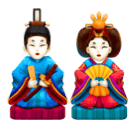
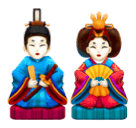
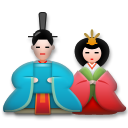
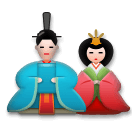
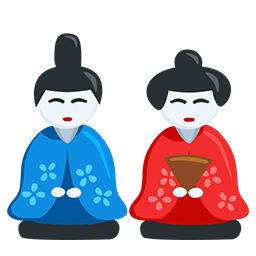
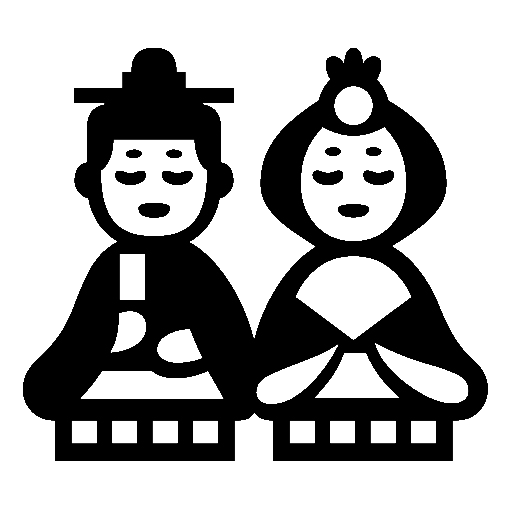
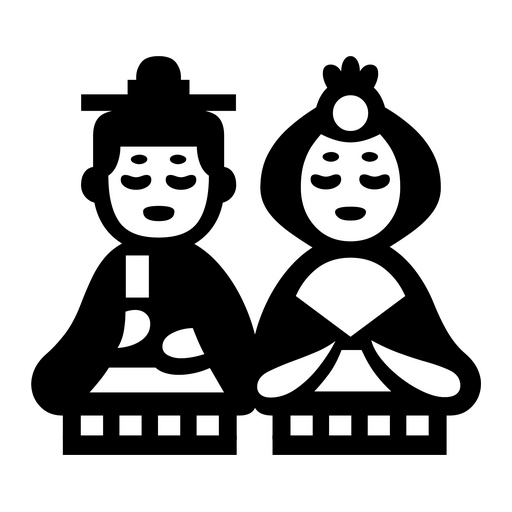
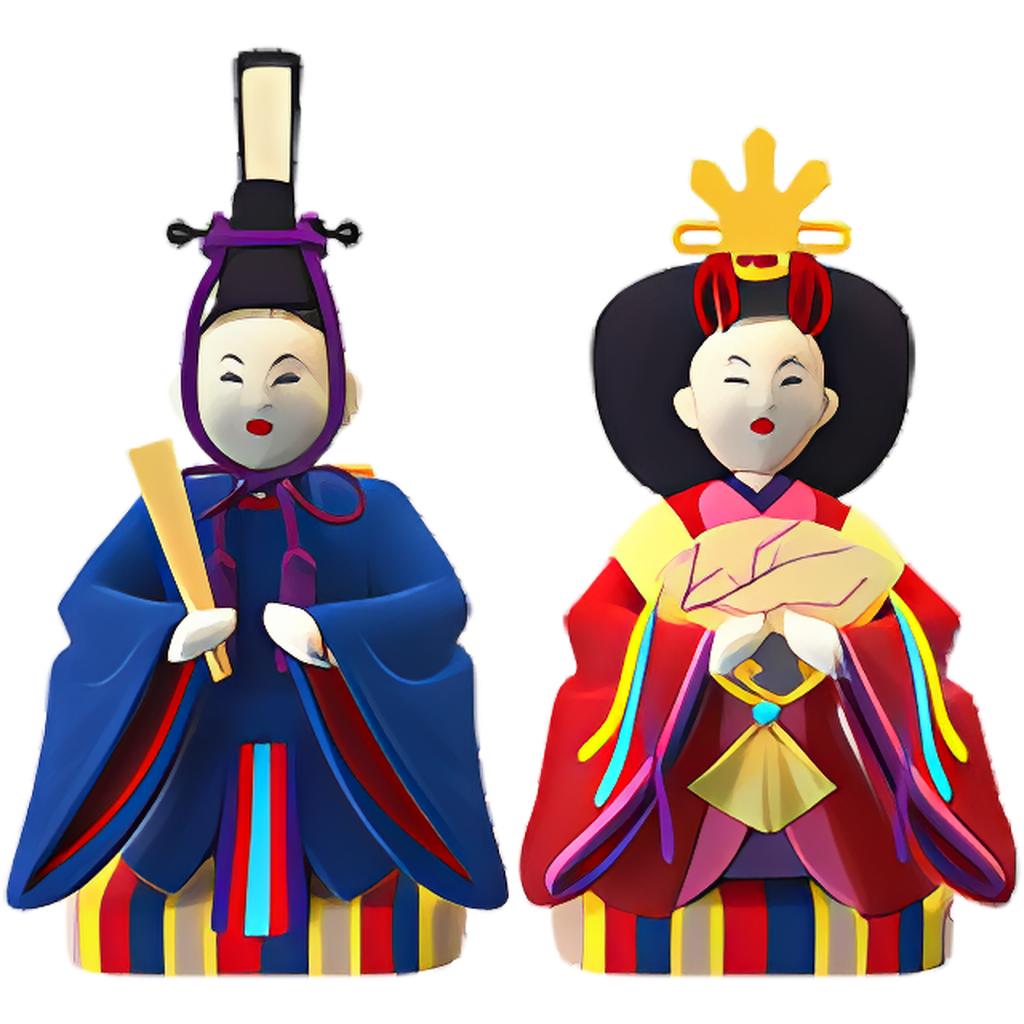
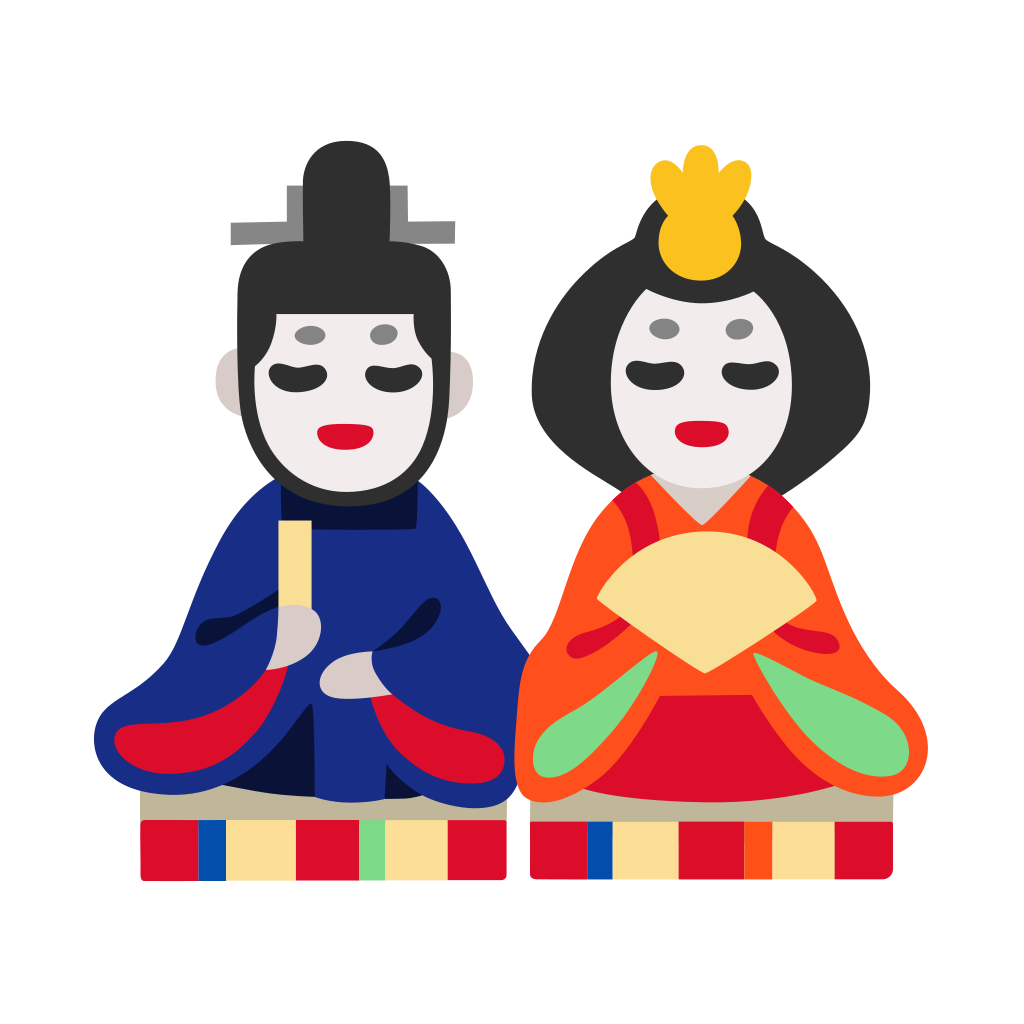
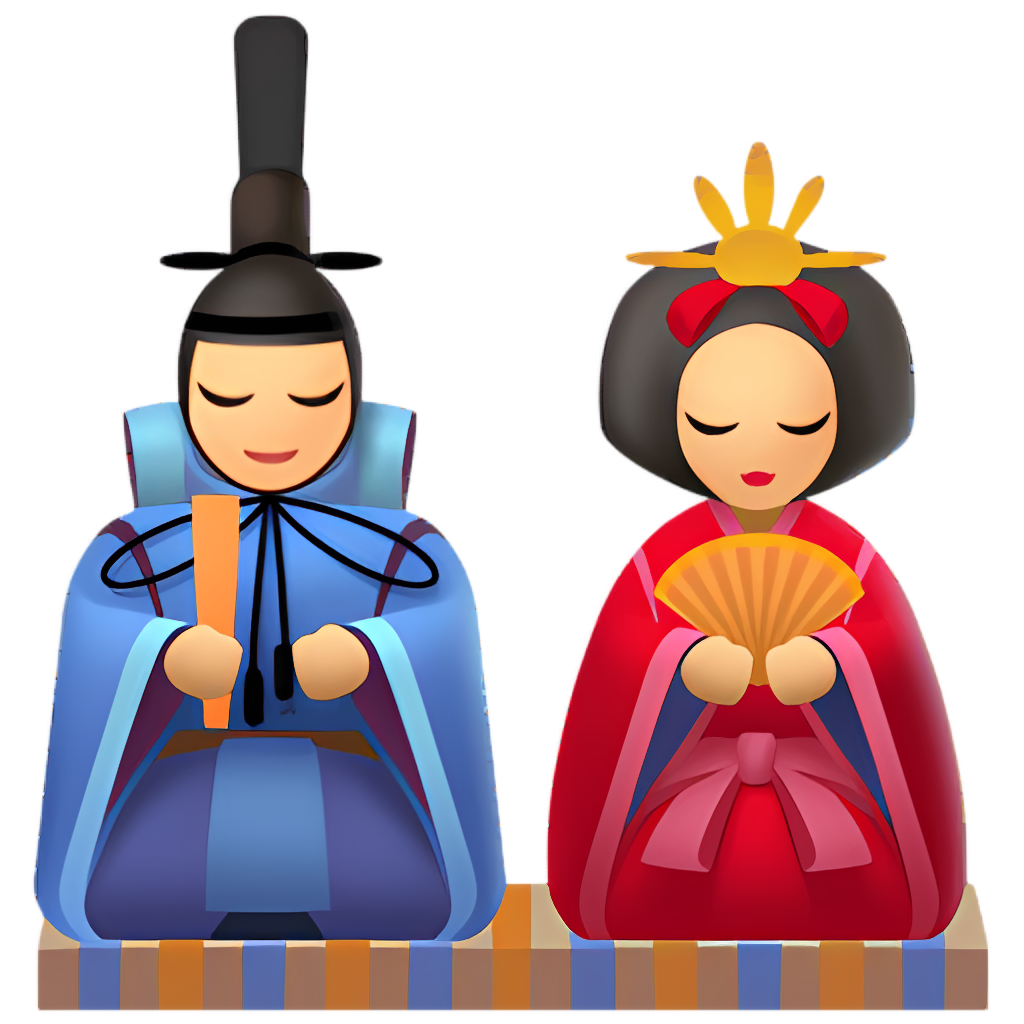
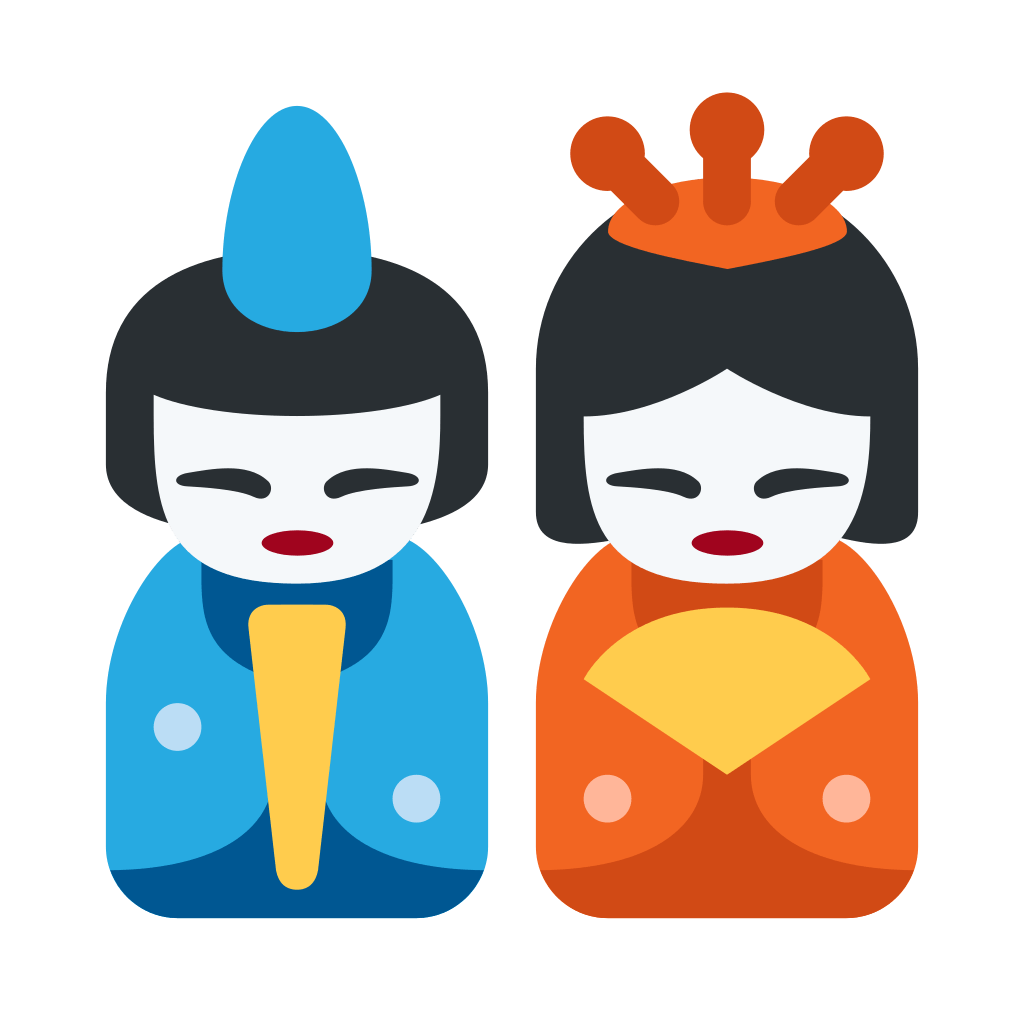
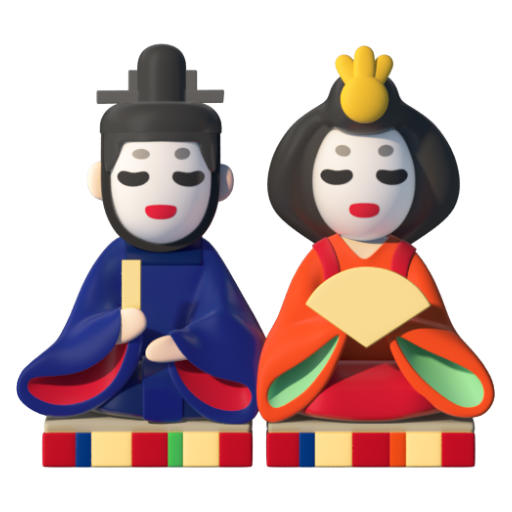
🎎 Represents ornamental dolls displayed for Hinamatsuri, Japan’s Girls’ Day. Used to celebrate the festival, share family traditions, and discuss Japanese cultural displays.
Compare platform designs and explore its recorded visual history.
71 recorded appearances across 19 platform families
Platform comparison
Compare the Japanese Dolls emoji across platforms
10 platform designs
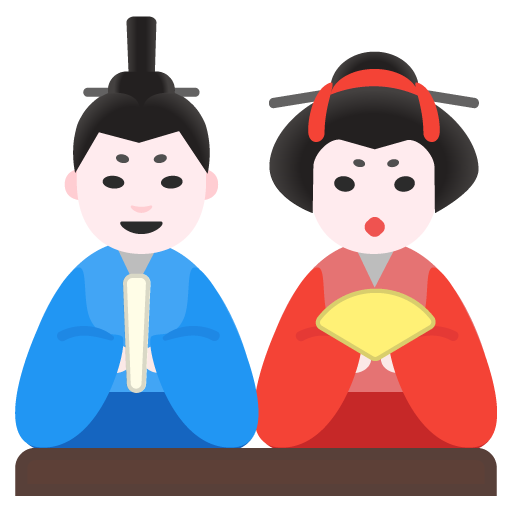
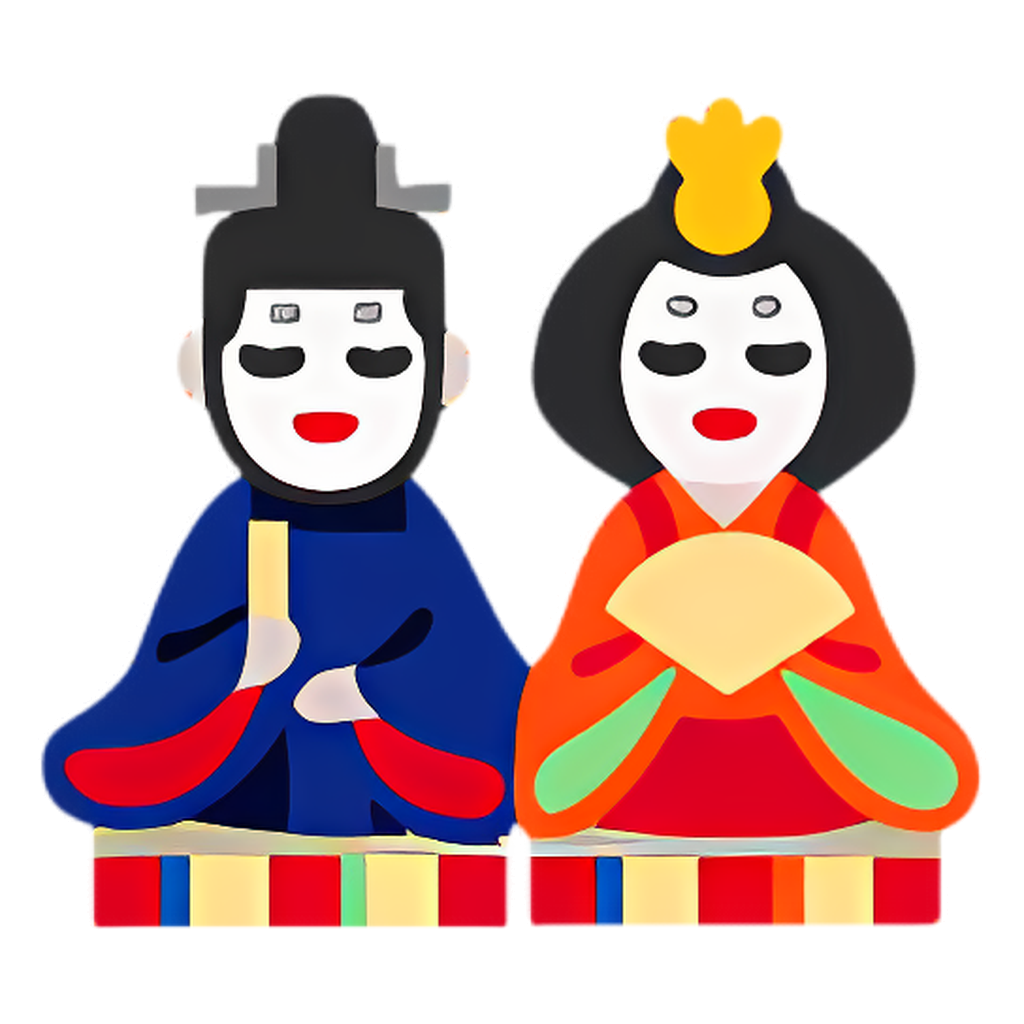
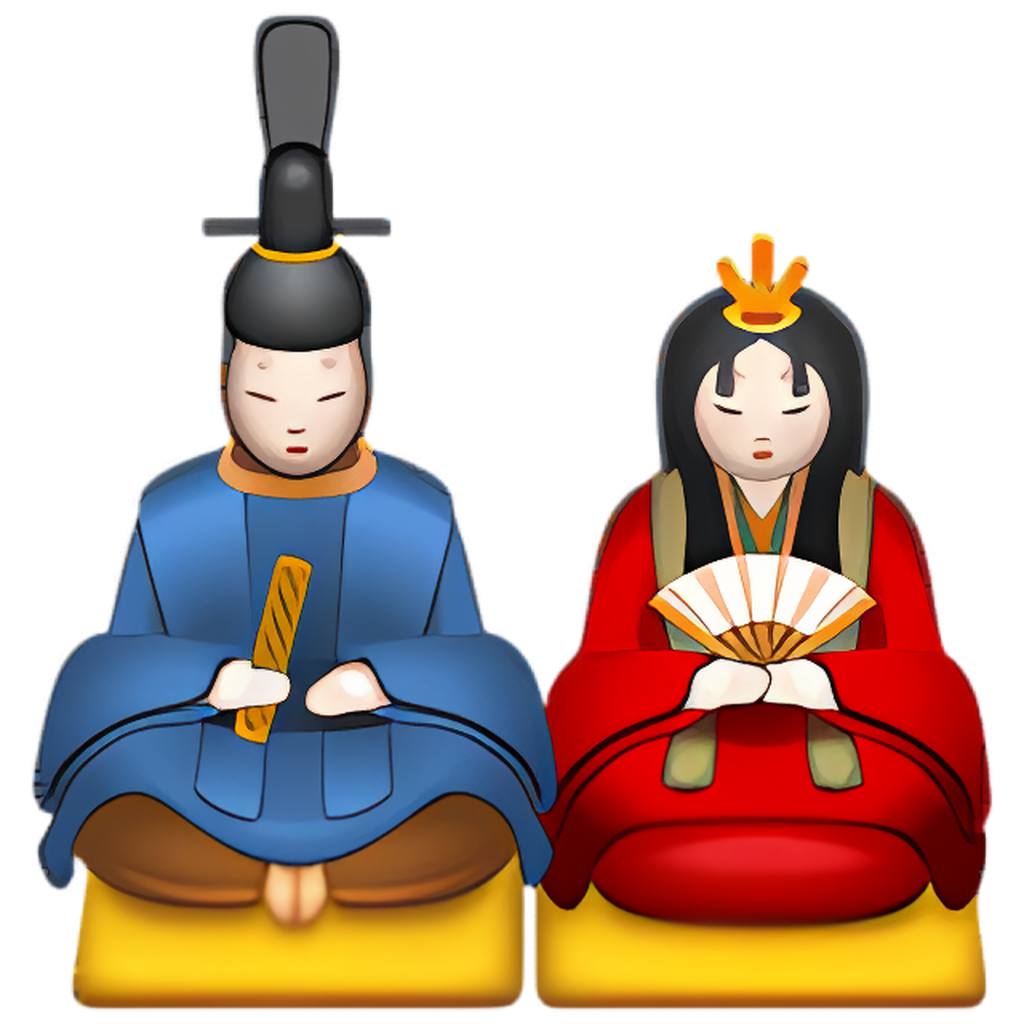
Compare 🎎 in Apple, Google, Samsung and other styles. Download each available version as a transparent PNG directly from its card, or choose SVG where available. Copying the character uses the style of the receiving device.
Enhanced PNGs are reconstructed from smaller vendor artwork; the exact originals are shown above for comparison. Artwork credits & usage terms
The visual archive
Japanese Dolls emoji design history
71 recorded appearances across 19 platform families
Follow this emoji’s recorded designs, from the earliest artwork on the left to the latest documented version on the right. Download a particular original to keep its platform design.
Original dimensions and animation are preserved. Dates labelled “Date unverified” have not been independently verified; limited-precision records show only the known month or year. Date checks identify the named release, not the first appearance of every drawing. Releases that reuse a drawing are not necessarily separate design milestones. Unavailable originals are marked on their records. How this archive is documented →
The meaning
What does the 🎎 Japanese Dolls emoji mean?
Depicting an ornamental pair of Emperor and Empress dolls, this emoji represents the traditional Japanese Hinamatsuri festival. It features figures in elaborate Heian-era court attire, symbolizing wishes for health and prosperity. The aesthetic conveys cultural elegance, celebration of heritage, and the formal beauty of historical craftsmanship through its vibrant, detailed composition.
Common uses
Celebrating Hinamatsuri or Girls' Day on March 3rd to honor female family members.
Expressing an appreciation for Japanese history, Shinto traditions, and classical aesthetics.
Representing formal partnerships, royal motifs, or high-status couples in a cultural context.
Thematic decoration for travel content specifically focused on Kyoto or historical Japanese landmarks.
Background
This emoji was introduced in Unicode 6.0 in 2010. It has historical mappings to KDDI and SoftBank carrier symbols.
Copy 🎎 to use the Unicode character; the receiving device chooses its appearance. Download an available PNG or SVG to keep a particular drawing. Historical originals retain their native bytes and dimensions. Enhanced PNGs are separately labeled generated derivatives.