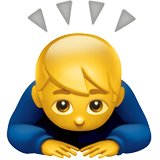
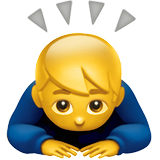
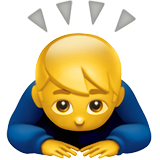
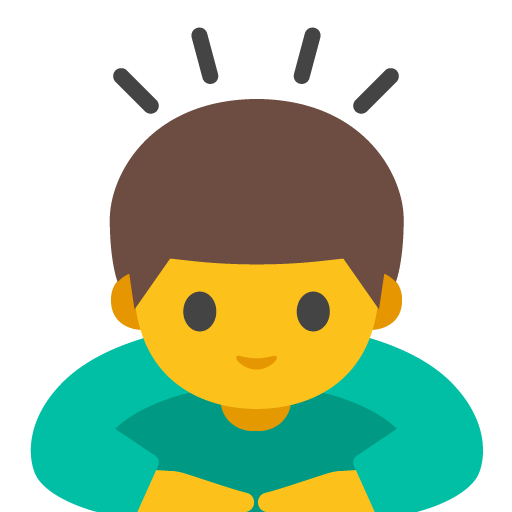
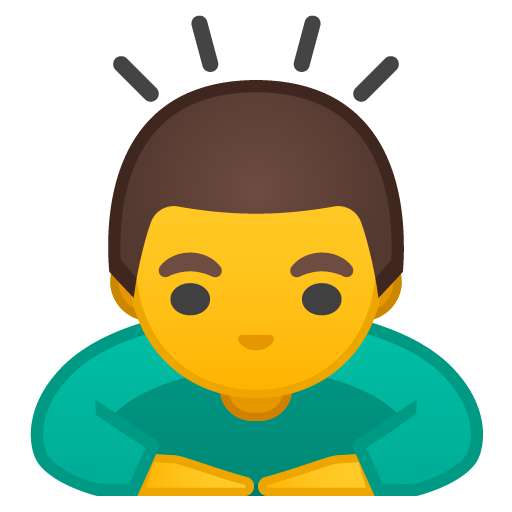
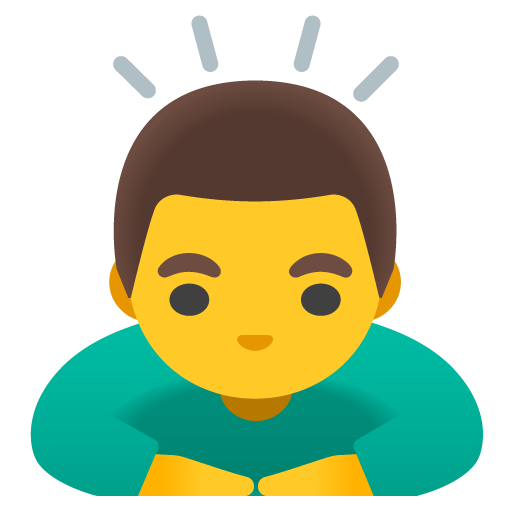
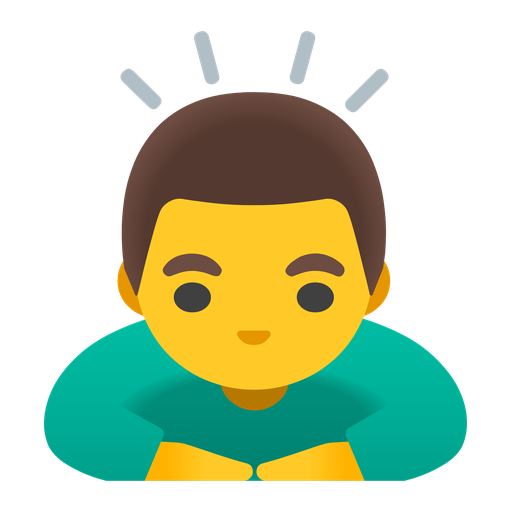
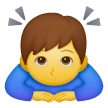
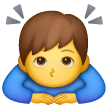
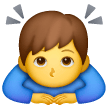
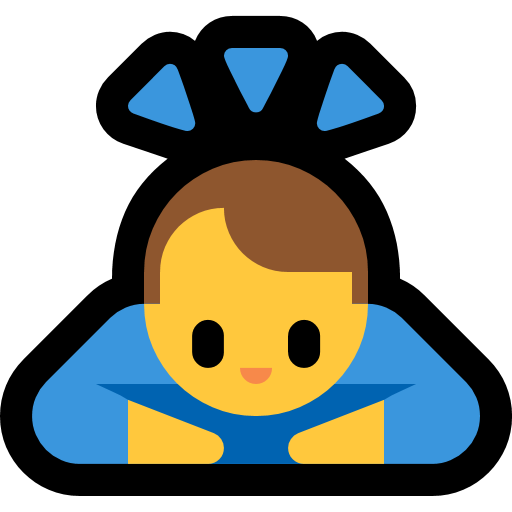
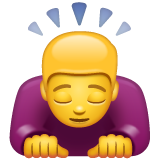
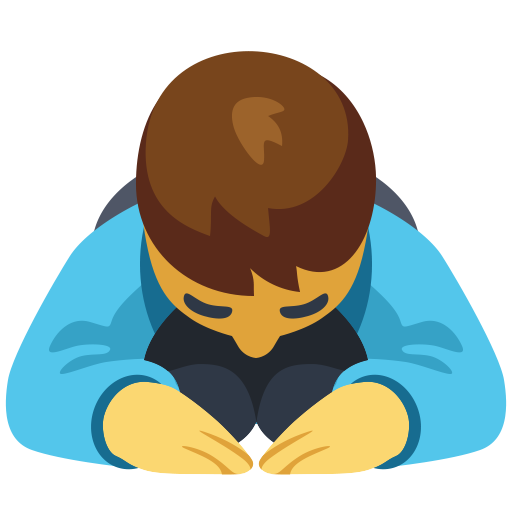
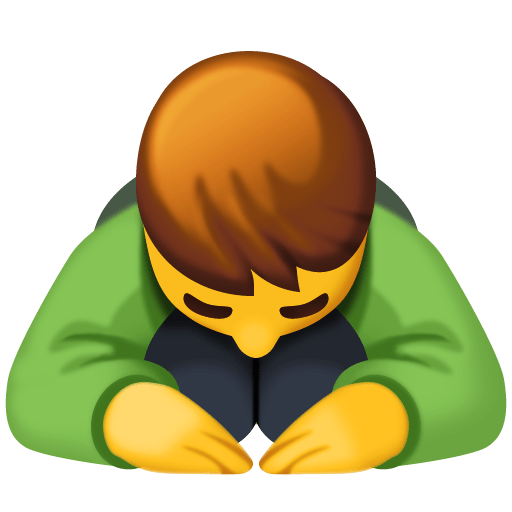
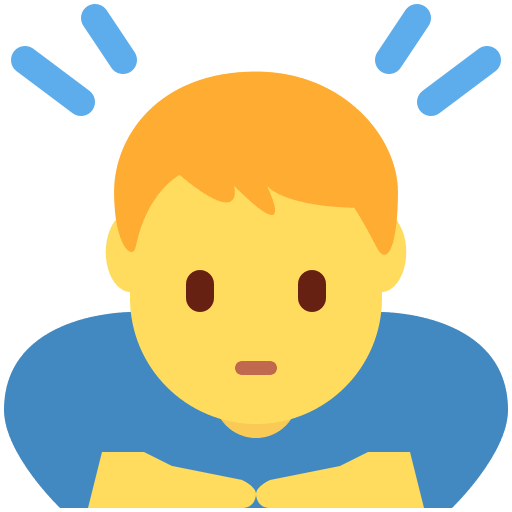
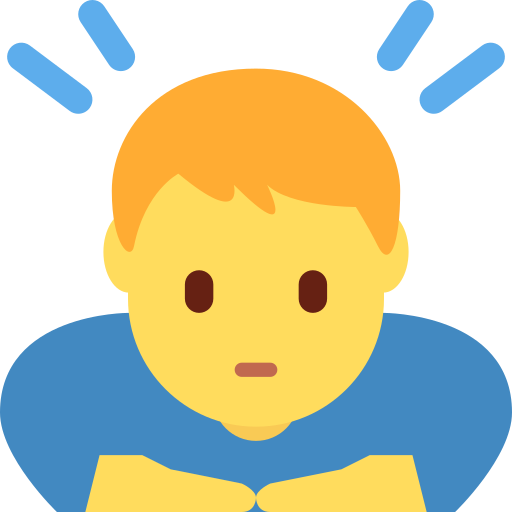
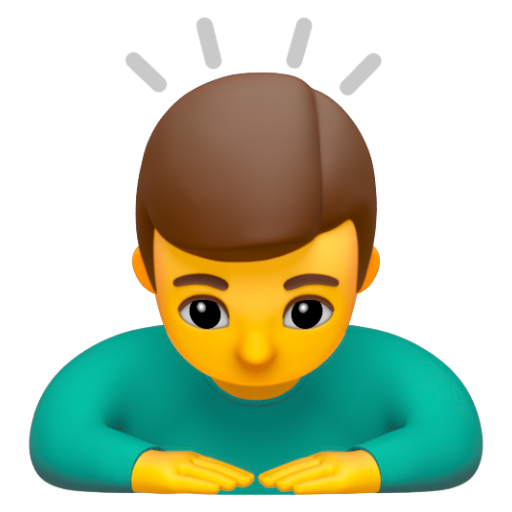
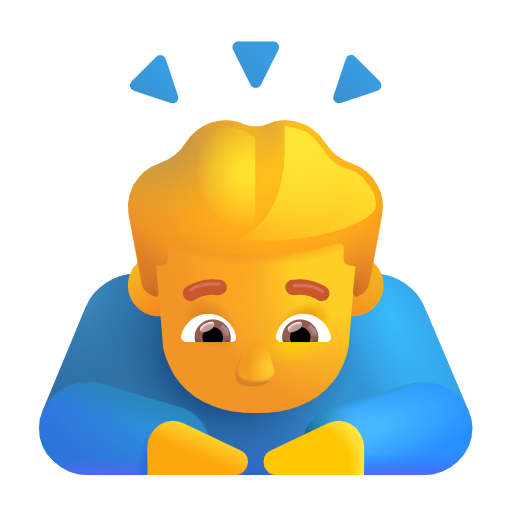
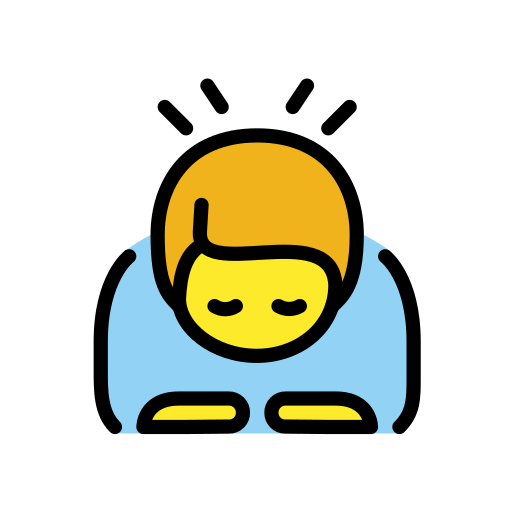
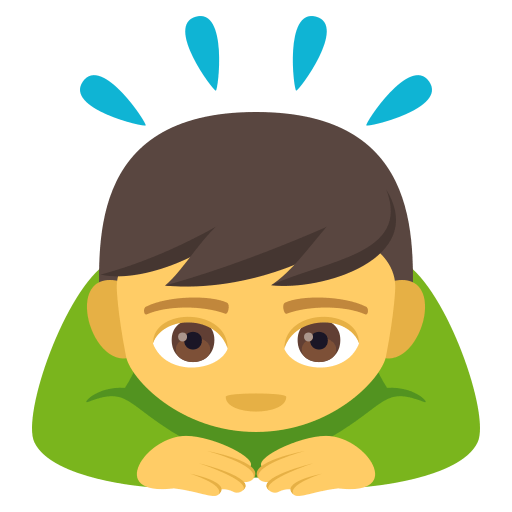
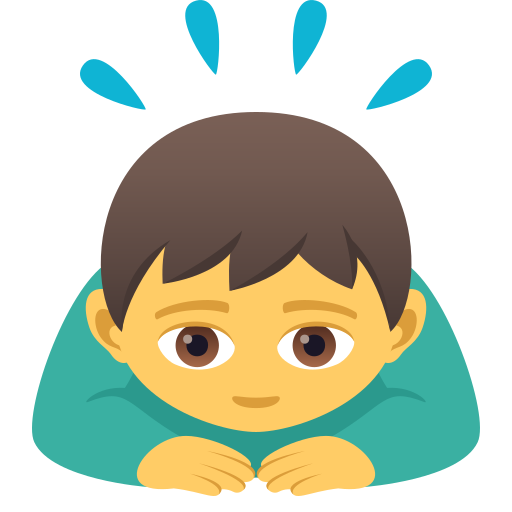
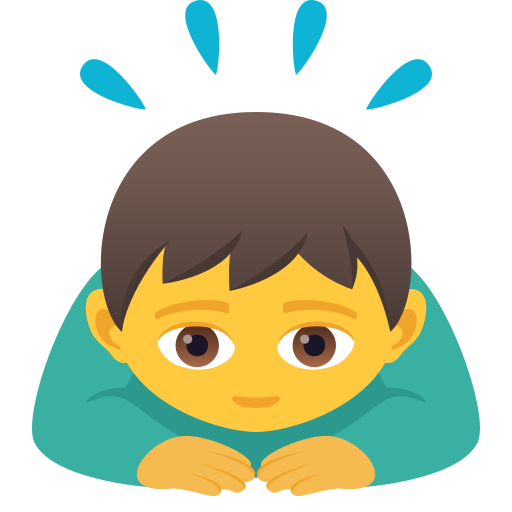
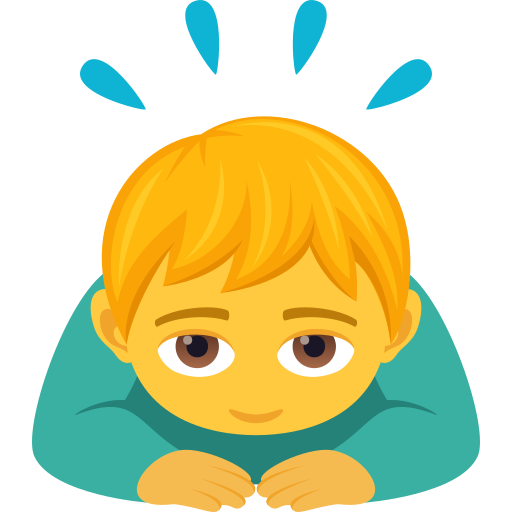
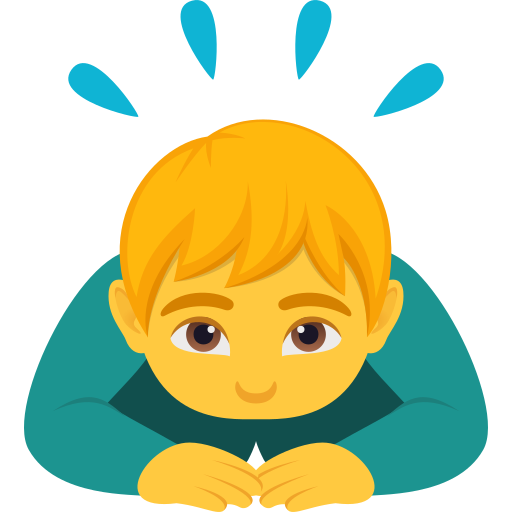
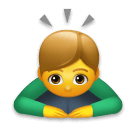
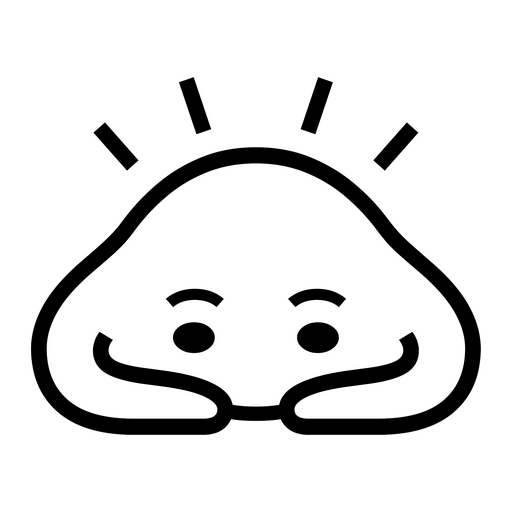
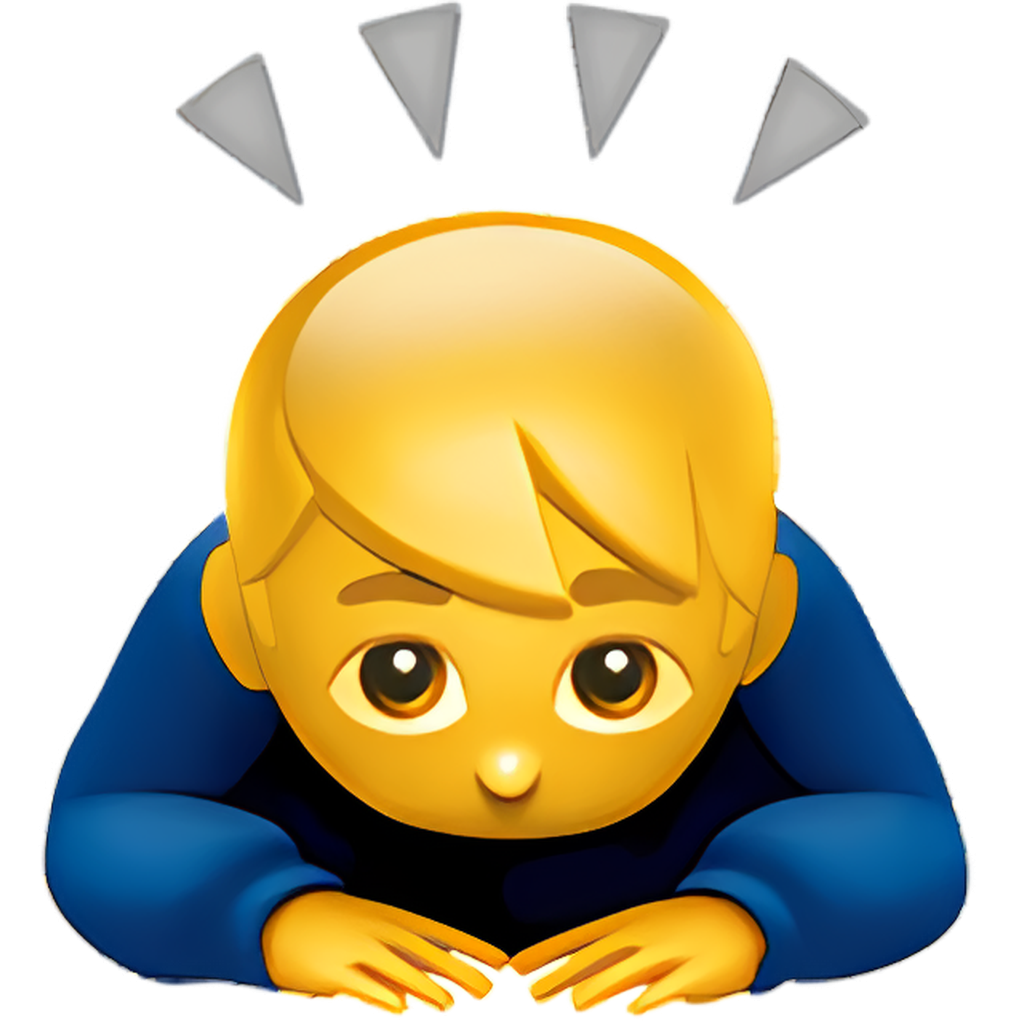
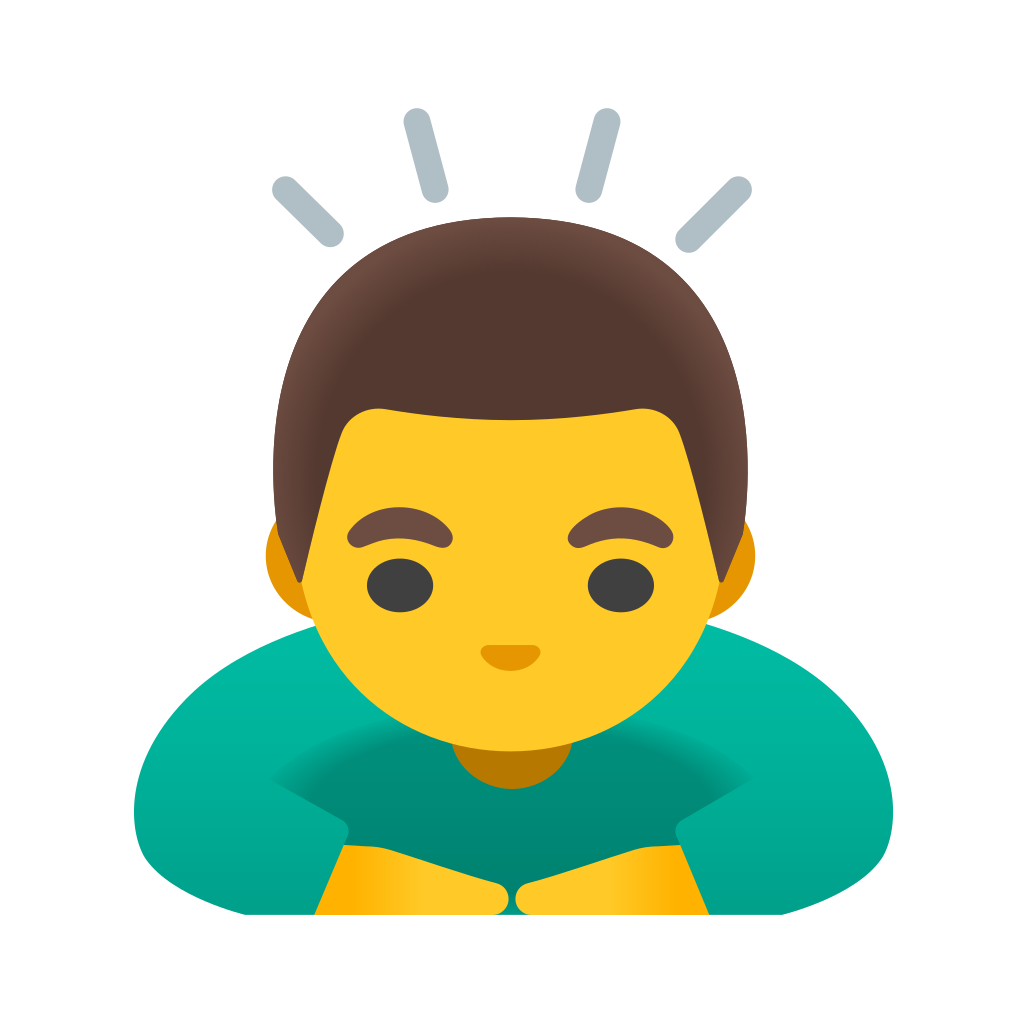
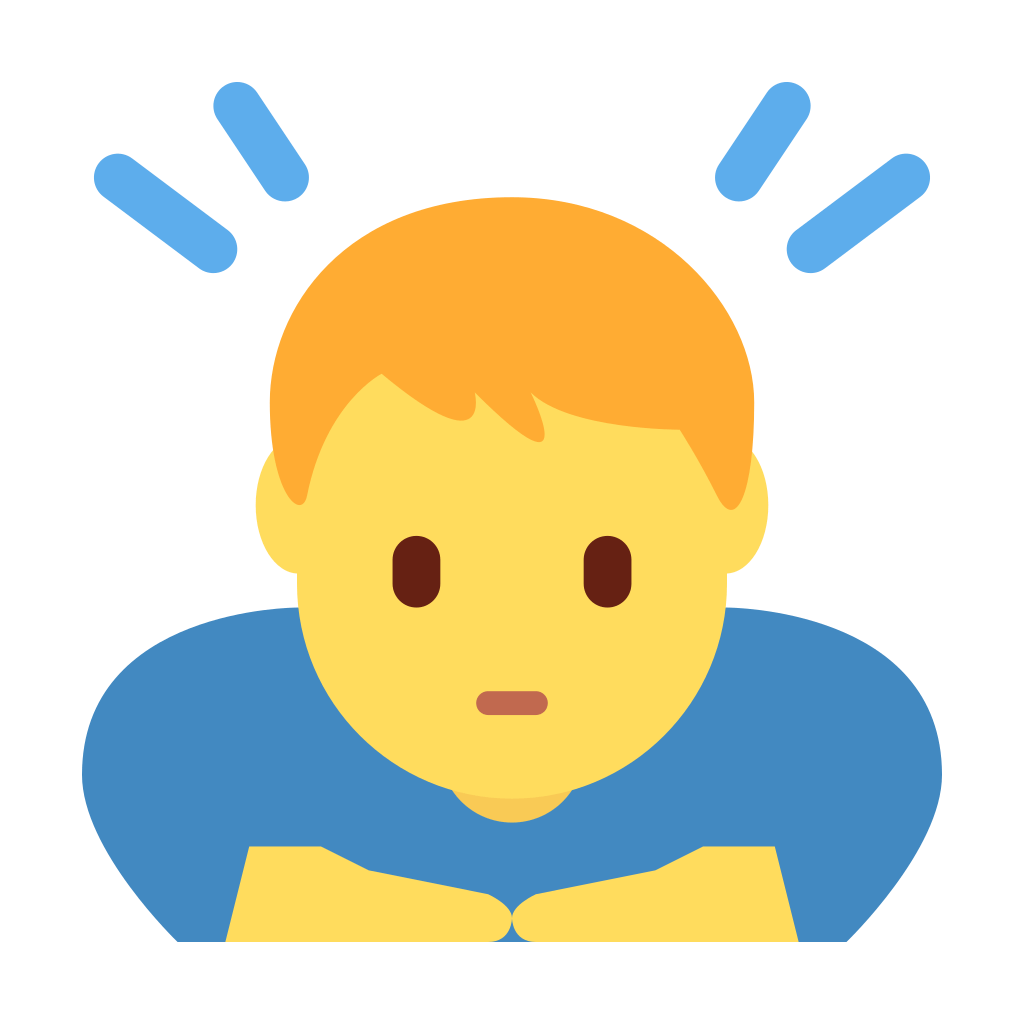
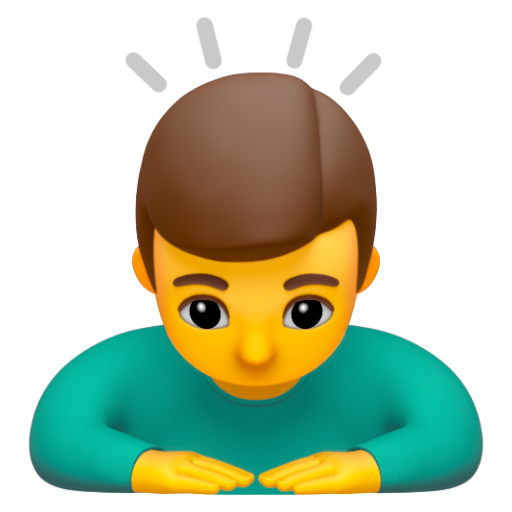
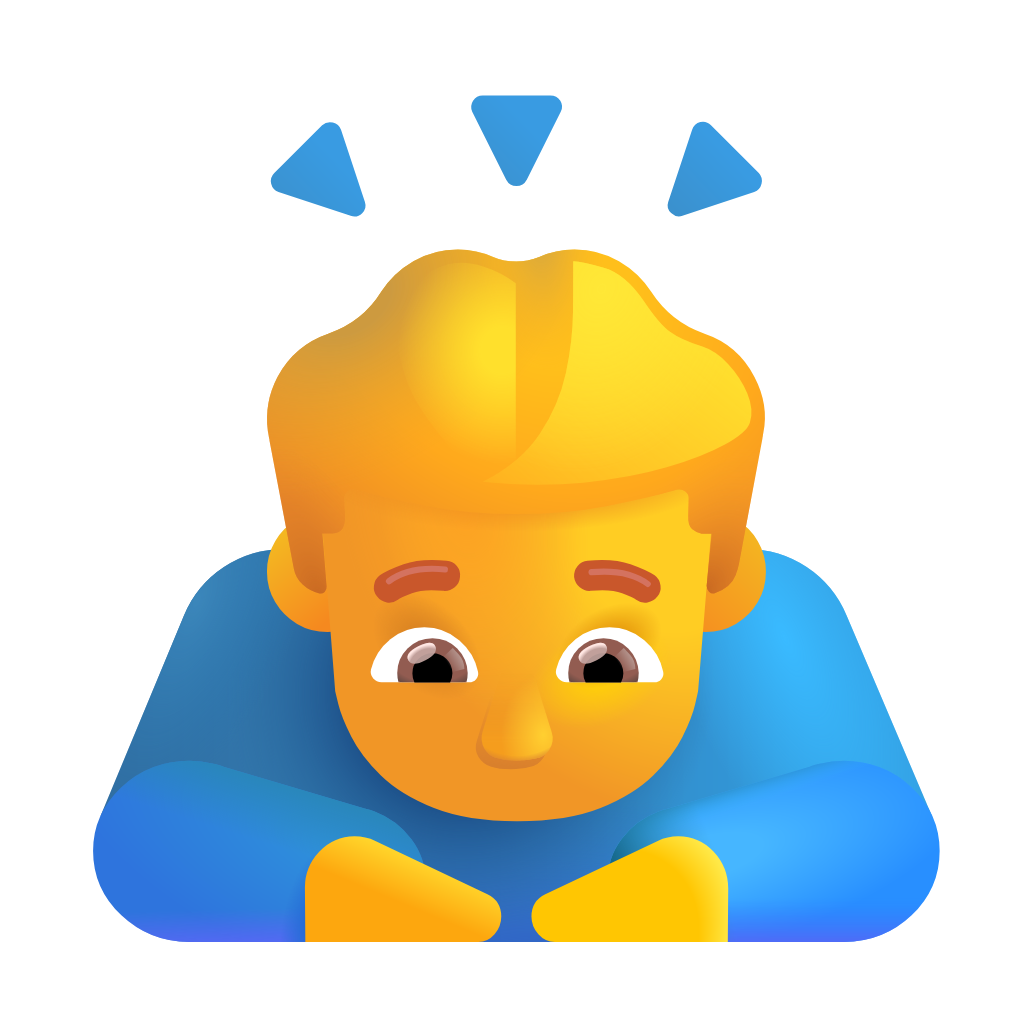
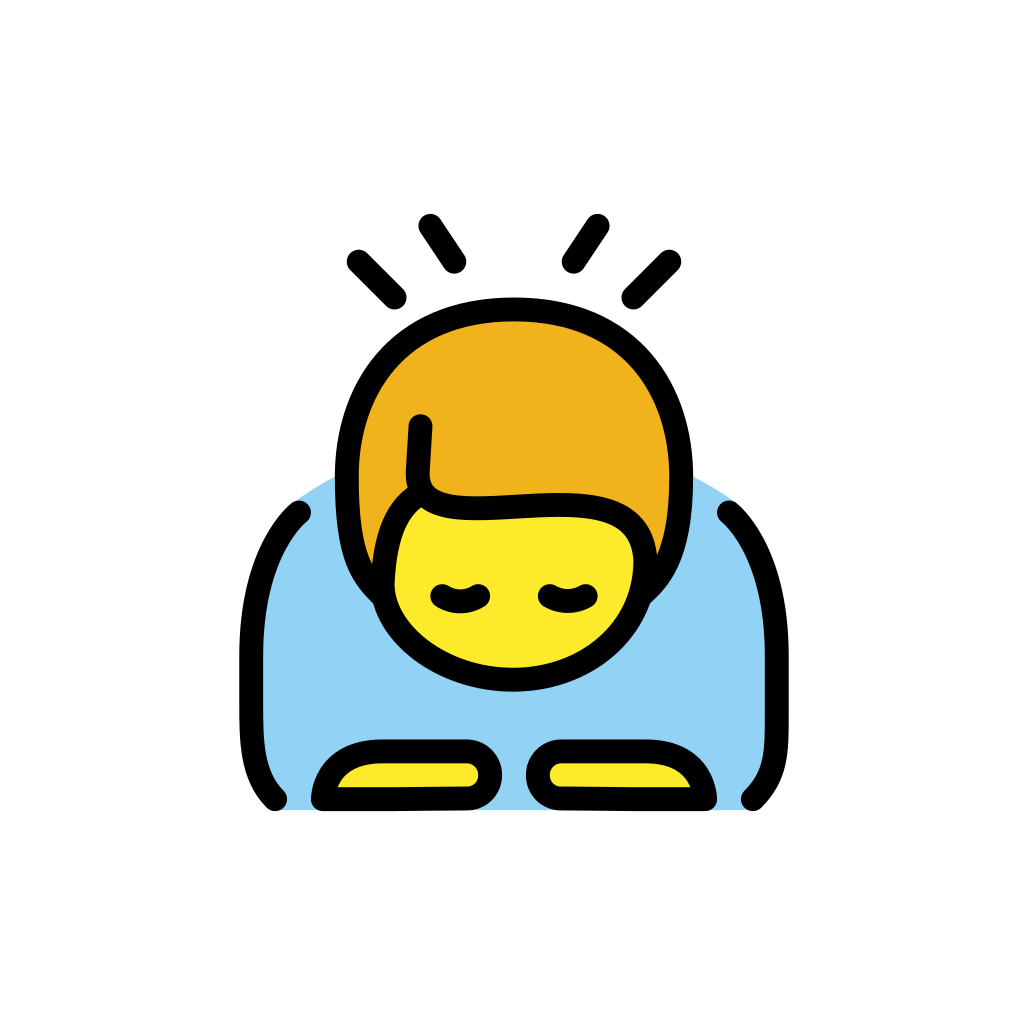
🙇♂️ expresses respect, a sincere apology, or deep gratitude through a man's bow. It can accompany a humble request or playful praise for someone's skill.
Compare platform designs and explore its recorded visual history.
44 recorded appearances across 14 platform families
Platform comparison
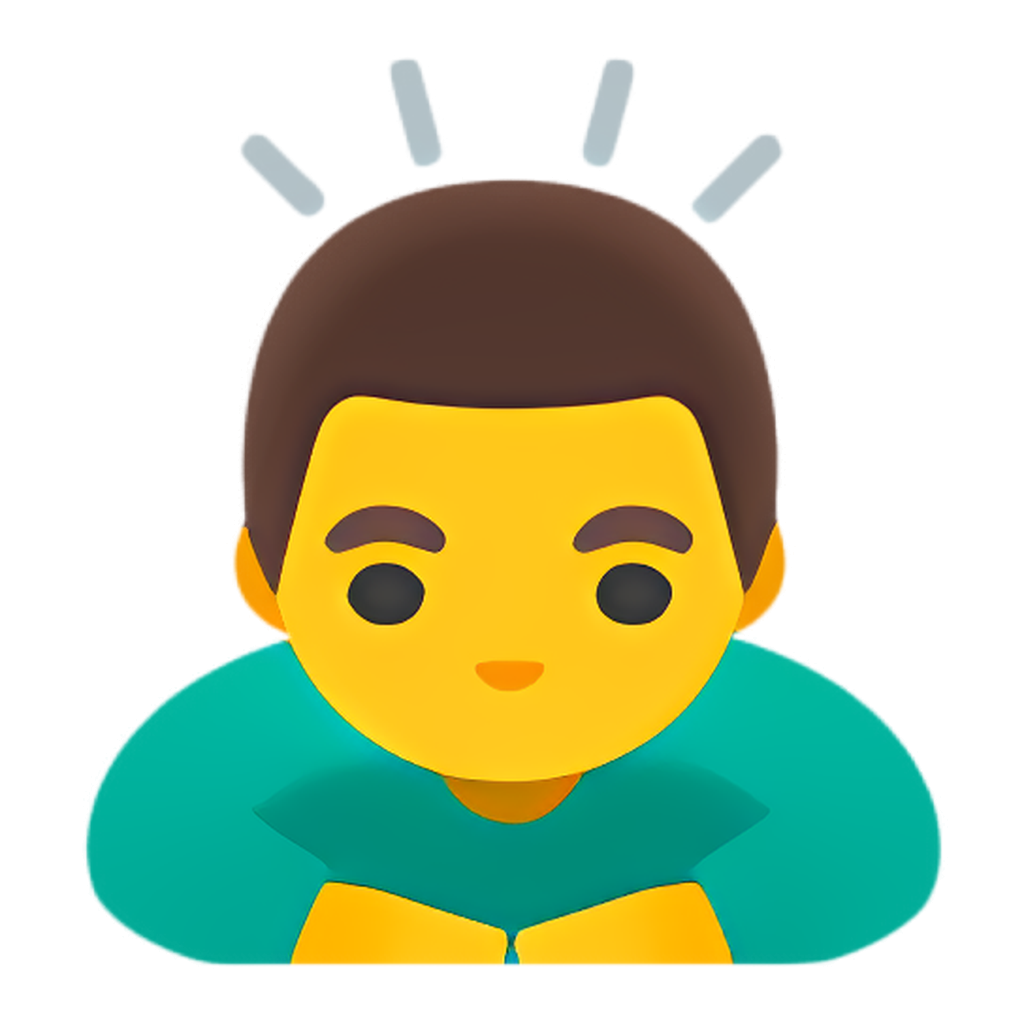
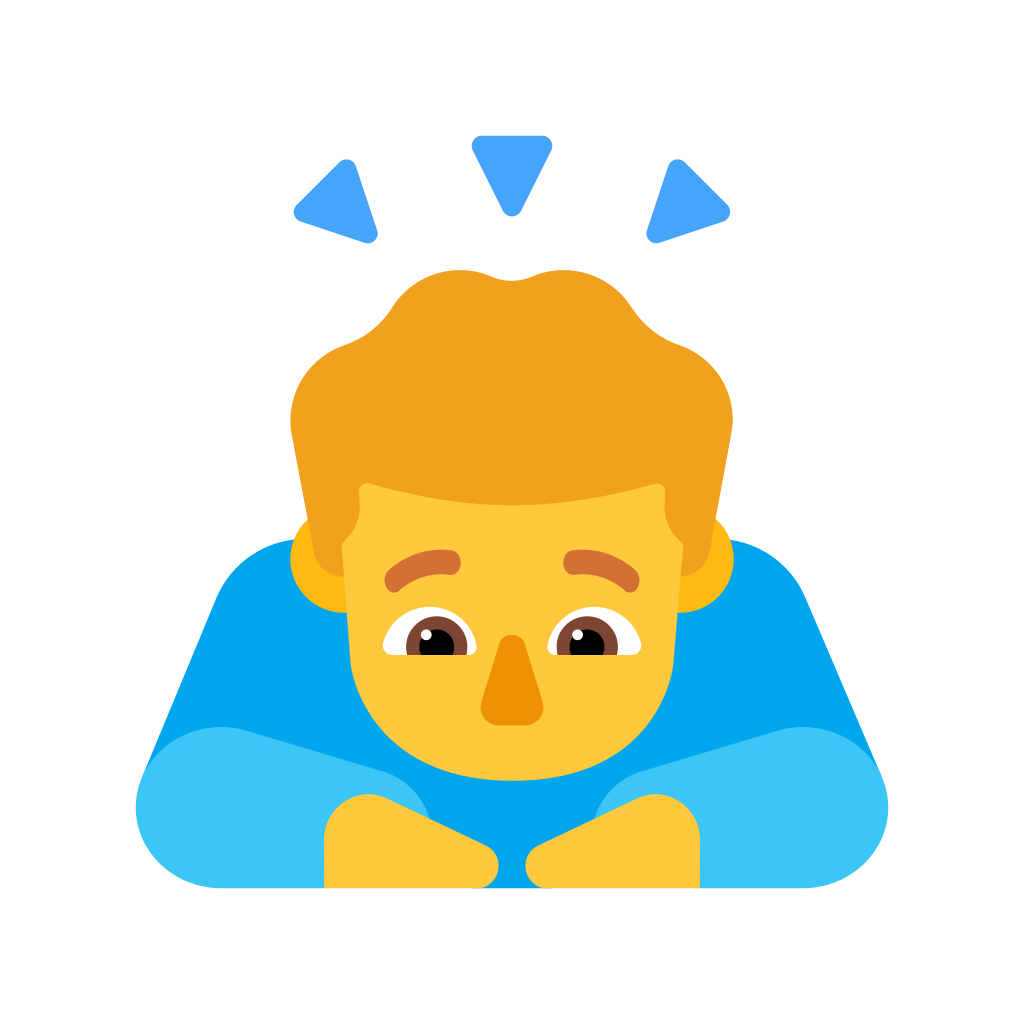
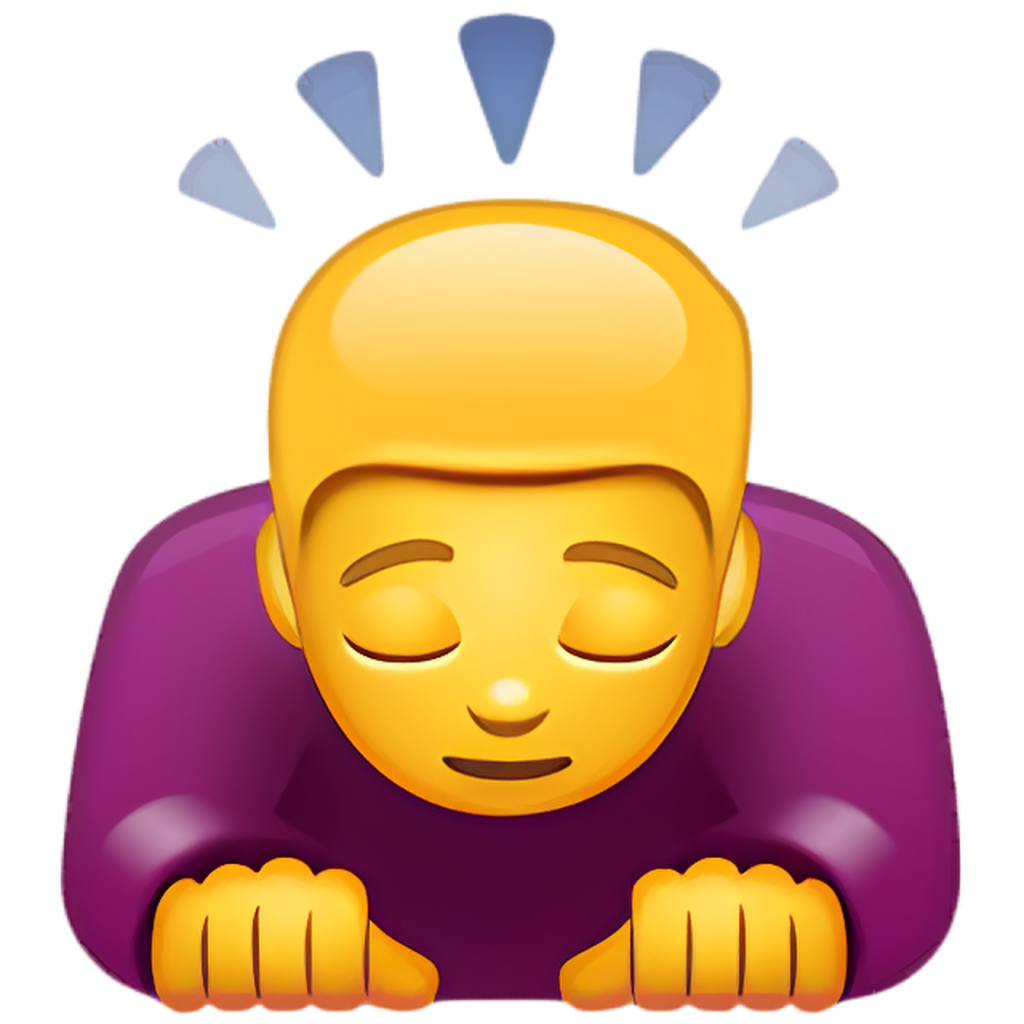
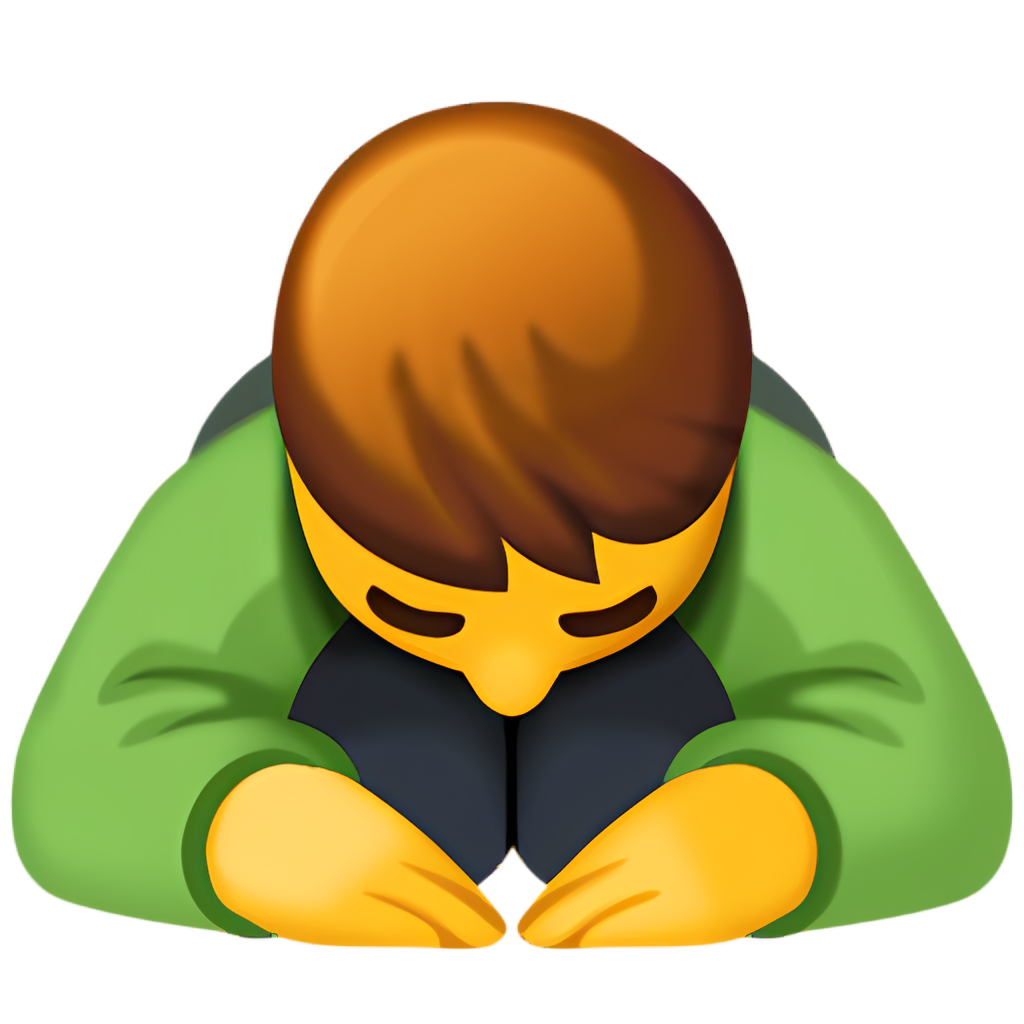
Compare the Man Bowing emoji across platforms
10 platform designs
Compare 🙇♂️ in Apple, Google, Samsung and other styles. Download each available version as a transparent PNG directly from its card, or choose SVG where available. Copying the character uses the style of the receiving device.
Enhanced PNGs are reconstructed from smaller vendor artwork; the exact originals are shown above for comparison. Artwork credits & usage terms
The visual archive
Man Bowing emoji design history
44 recorded appearances across 14 platform families
Follow this emoji’s recorded designs, from the earliest artwork on the left to the latest documented version on the right. Download a particular original to keep its platform design.
Original dimensions and animation are preserved. Dates labelled “Date unverified” have not been independently verified; limited-precision records show only the known month or year. Date checks identify the named release, not the first appearance of every drawing. Releases that reuse a drawing are not necessarily separate design milestones. Unavailable originals are marked on their records. How this archive is documented →
The meaning
What does the 🙇♂️ Man Bowing emoji mean?
The man bowing emoji represents a person performing a deep, respectful bow known in Japan as dogeza. It features a male figure with his torso lowered and head positioned toward the ground. This character primarily conveys sincere apologies, deep gratitude, or profound respect, signaling a high level of humility and social etiquette in digital communication.
Common uses
Expressing a formal 'Saigo no Onegai' or a desperate favor in a professional setting.
Offering a sincere apology to signify deep regret or an admission of fault.
Displaying intense fandom or 'worship' toward a celebrity or high-achieving peer.
Used ironically in Western cultures to show exaggerated subservience or mock humility.
Background
The base bowing character was introduced in Unicode 6.0 in 2010. Unicode’s historical mapping data links the base character to equivalent symbols in au by KDDI and SoftBank sets. In 2016, this male ZWJ sequence was included in Emoji 4.0, distinguishing it from the gender-neutral and female variants.
Copy 🙇♂️ to use the Unicode character; the receiving device chooses its appearance. Download an available PNG or SVG to keep a particular drawing. Historical originals retain their native bytes and dimensions. Enhanced PNGs are separately labeled generated derivatives.